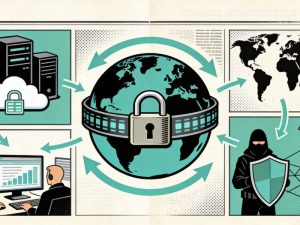

A trusted employee, contractor, or partner can create serious security exposure without ever looking like a traditional attacker. In many incidents, the problem is not advanced malware but ordinary access used in the wrong way, at the wrong time, or without the right oversight. That is what makes insider risk difficult for business leaders to manage. When organizations ask how do insider threat programs defend against insider threats, the real answer starts with visibility, governance, and early intervention before a business issue becomes a security event.
Insider risk is a business problem before it becomes a technical one
Insider threats are often associated with malicious intent, but that is only part of the picture. A departing employee copying sensitive files, a finance user sharing data through personal email, or a privileged administrator bypassing process controls can all create harm even if the motivation is different. The business impact can include data loss, compliance failures, intellectual property exposure, operational disruption, and reputational damage. Because of this, insider threat programs are designed to reduce risk across people, process, and technology rather than rely on a single security tool.
What an insider threat program actually does
An effective program brings structure to a problem that is easy to miss in day-to-day operations. Instead of reacting only after damage is done, security teams build policies that define acceptable behavior, sensitive data access, escalation paths, and investigation workflows. Monitoring then helps identify unusual activity, such as large downloads, access outside normal working hours, or repeated attempts to reach restricted systems. The goal is not blanket surveillance. It is risk-based oversight that helps organizations detect warning signs early and respond in a measured way.
How organizations defend against insider threats in practice
Most mature programs combine several controls that work together. User and Entity Behavior Analytics (UEBA) can highlight activity that falls outside normal patterns. Data Loss Prevention (DLP) can monitor and restrict the movement of sensitive information. Identity and access management policies can limit who has access to critical assets in the first place. At the same time, clear HR, legal, and compliance coordination helps organizations investigate concerns responsibly and consistently.
- Limit privileged access to only what is necessary for each role.
- Monitor sensitive data movement across email, cloud apps, and endpoints.
- Review behavior patterns for unusual access, downloads, or sharing activity.
- Set response procedures for high-risk events before an incident occurs.
Technology matters, but governance makes the program work
Many organizations invest in monitoring tools and still struggle to build an effective insider threat capability. The gap usually comes from unclear ownership, inconsistent policies, or poor coordination between security and business functions. A strong program defines who reviews alerts, how evidence is handled, when an event is escalated, and what level of response is appropriate. That structure helps reduce false alarms, protect employee privacy, and support better decision-making during sensitive investigations.
FAQ
Are insider threat programs only for malicious employees?
No. They also help detect negligence, compromised accounts, and risky behavior that may not be intentional but can still cause serious business harm.
Do insider threat programs replace other security controls?
No. They work alongside identity security, DLP, endpoint monitoring, and incident response to close a risk area that often crosses multiple teams.
Choosing the right approach
Insider threat programs are most effective when they match the organization’s size, regulatory environment, and operational model. A business with highly sensitive intellectual property may need stronger monitoring and stricter access controls than one with lower-risk data exposure. What matters most is building a practical model that balances security, privacy, and operational continuity. Organizations evaluating insider risk strategies can work with Terrabyte to identify technologies and cybersecurity solutions from leading vendors that align with their security requirements and business goals.